Aug 2026 · 4 min read
Building thesanaullah.dev: A Portfolio CMS That Ingests Store Links and Never Hits APIs at Render Time
I rebuilt my portfolio as an ingestion system: paste a store URL, normalize it once, override what matters, and keep public pages offline from third-party APIs.
- nextjs
- payload-cms
- portfolio
- ingestion
- typescript
- full-stack
- seo
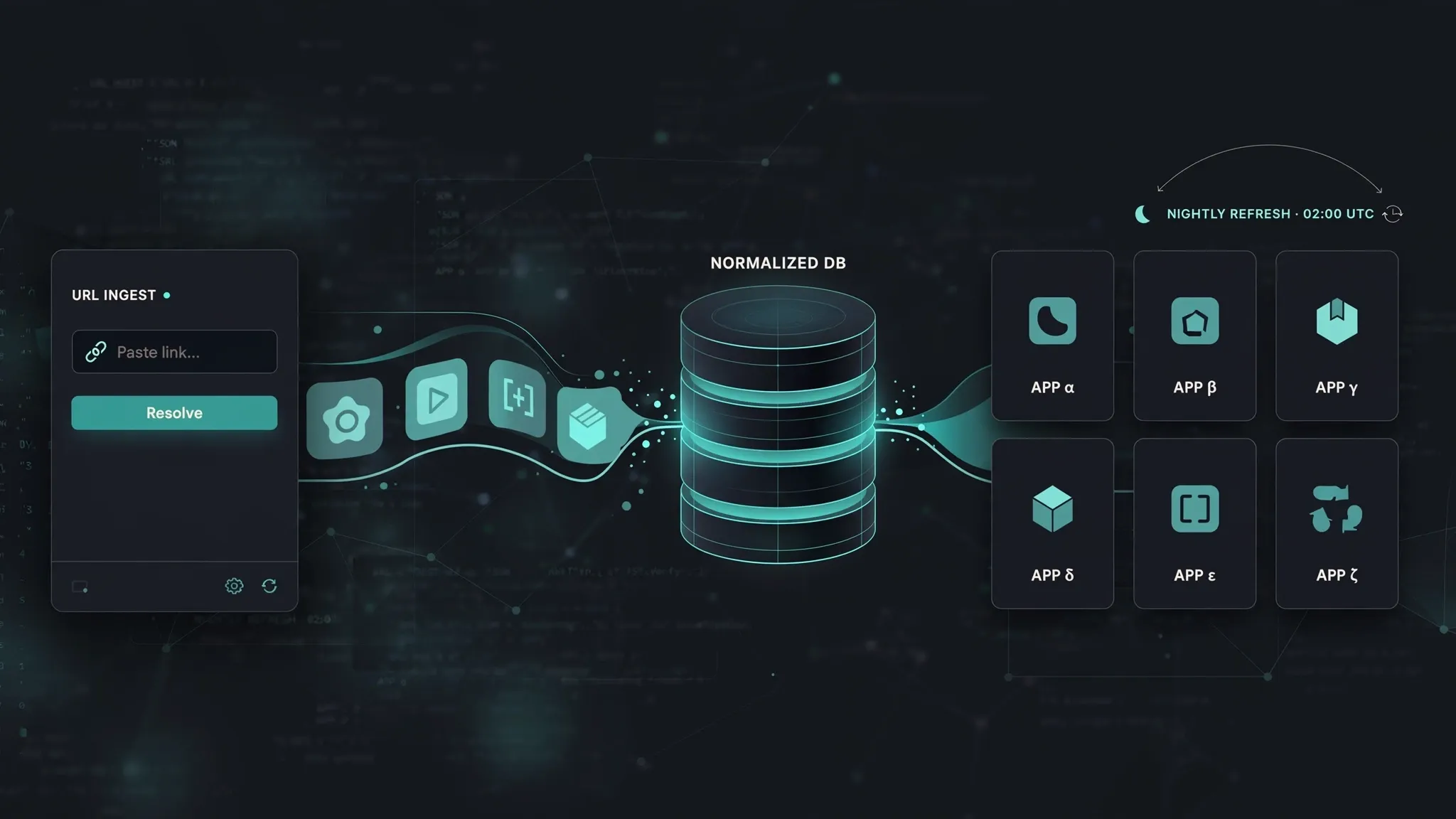
I rebuilt thesanaullah.dev as a portfolio with a self-service admin — and one rule that shaped the whole architecture:
Public pages never hit an external API at render time.
Listing apps from the App Store, Play Store, pub.dev, GitHub, and npm is easy if every page view scrapes live. It’s also slow, brittle, and a great way to get rate-limited on launch day.
So the site doesn’t do that.
The pipeline: fetch once, store, override, refresh
paste URL in admin
      ↓
resolver registry matches provider
      ↓
resolve() → normalized auto fields + rawPayload
      ↓
preview in admin → edit what you want
      ↓
save: auto + overrides + metrics + raw (JSONB)
      ↓
public pages read DB only (static / ISR)
      ↓
nightly cron → re-resolve → update AUTO only → revalidateTag()
Three ideas do most of the work:
rawPayload— store the upstream blob. When you later want a field you didn’t map, it’s already there. No migration panic.- Override layer —
title = overrides.title ?? auto.title. Cron may refresh stars, downloads, versions, and ratings. It must not overwrite the sentence you wrote about your own app. Play Store blurbs are rarely how you’d describe your work. - Last good data wins on failure — a store outage records
lastErroron the document. It does not blank the public site.
A resolver registry, not a pile of ifs
Each source implements the same shape: test(url) and resolve(url).
Order matters. GitHub PR claims before GitHub repo. Fallback (Open Graph / JSON-LD) is last and always matches.
Source | How | Notes |
|---|---|---|
pub.dev | Official JSON API | likes, pub points, popularity |
App Store | iTunes Lookup | solid, free, official |
Play Store | scrape | no public API — treat as draft |
GitHub PR / repo | REST (+ README mining) | stars, topics, screenshots from README |
npm | registry + downloads | version, weekly downloads |
Fallback | OG / JSON-LD | best-effort |
Play Store and generic scrapes set needsReview on first resolve. Nightly refresh does not re-raise that flag — otherwise clearing it would be pointless.
READMEs are first-class for pub.dev and GitHub: many packages have empty short descriptions, so the opener paragraph and screenshot candidates come from the linked README (with badge hosts filtered and image URLs HEAD-checked).
Merge rules that respect the operator
On refresh, adoption is not “always overwrite.”
A field is adopted from the new resolve only if you haven’t taken ownership — meaning the current value still matches what the previous auto write put there. Empty fields adopt. Once you change a title, the cron leaves it alone.
That lives in a Payload beforeChange hook (resolveSource). Forced resolve (req.context.forceResolve) is how the nightly job re-runs without changing the URL.
Cron without pretending Vercel Hobby is infinite
Refresh is a secured /api/cron/refresh endpoint, triggered by a GitHub Actions schedule (not Vercel Cron’s Hobby limits). It force-resolves items, then revalidateTag so metrics-driven pages actually update.
Locally the same logic is pnpm payload run scripts/refresh-items.ts.
Media: source CDN by default, R2 when you care
Icons and screenshots usually stay as URLs from auto (store/CDN). Updating a listing can update the site without a re-upload. Manual icon / gallery uploads still win when set — those (and the CV PDF) live on Cloudflare R2.
Hosting is Vercel for Next.js; DNS sits on Cloudflare so an R2 custom domain stays possible. Database is Neon Postgres. CMS is Payload 3 embedded in the same app.
What this is for
The site isn’t only a résumé page. It’s how I keep apps, packages, PRs, and writing in one admin without hand-copying store metadata every week — and without making visitors depend on iTunes being up.
Live: https://thesanaullah.dev
What I’d still harden
Play Store scraping will always be the weakest link — keep needsReview honest. Resolver smoke tests against live endpoints catch upstream shape changes that mocks would hide. And commercial-use limits on Vercel Hobby are worth remembering if the portfolio ever becomes a hard sales funnel.
The bet: ingest at write time, serve from your own truth, refresh metrics without rewriting your voice.
If you’re building a portfolio of shipped products: don’t scrape on every page view. Resolve once, merge carefully, fail soft.
Tagged
- nextjs
- payload-cms
- portfolio
- ingestion
- typescript
- full-stack
- seo
More writing
Other notes from the archive.
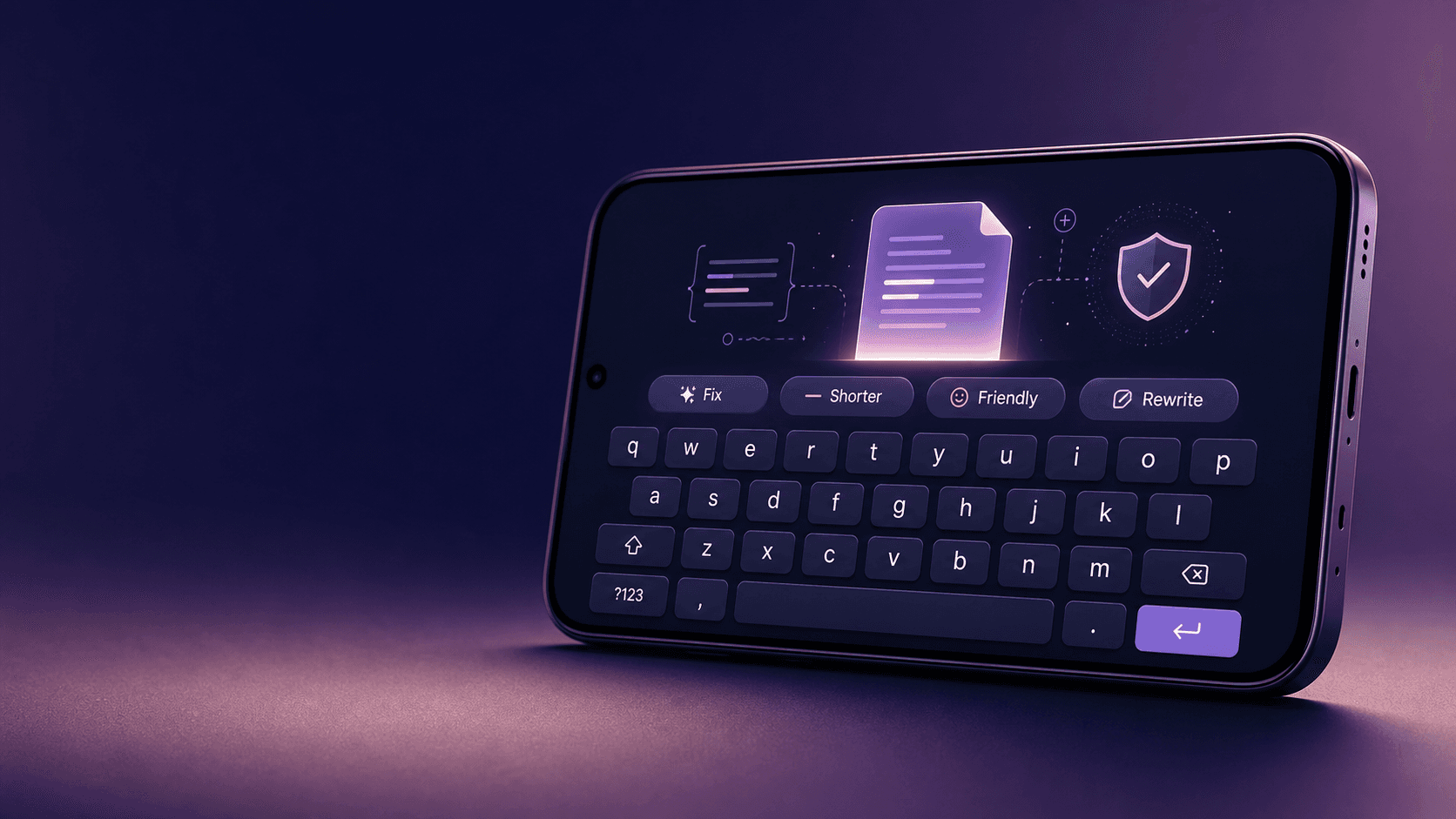
Building Lexora: A Privacy-First Writing Keyboard That Works Offline
Lexora is an Android keyboard that helps people improve spelling, grammar, clarity, and tone wherever they write. Here is how I built its on-device writing engine, custom keyboard, and fast Android integration without sending text to a server.
Oct 2026 · 7 min read

Building iDraw: A Flutter Drawing App With Lessons, a Studio, and an AI Coach
iDraw is a Flutter app I’m building to help people learn to draw — guided lessons, a freehand studio, progress tracking, and an AI coach powered by Google Gemini. Here’s the product brief and the tech behind the strokes.
Sep 2026 · 5 min read
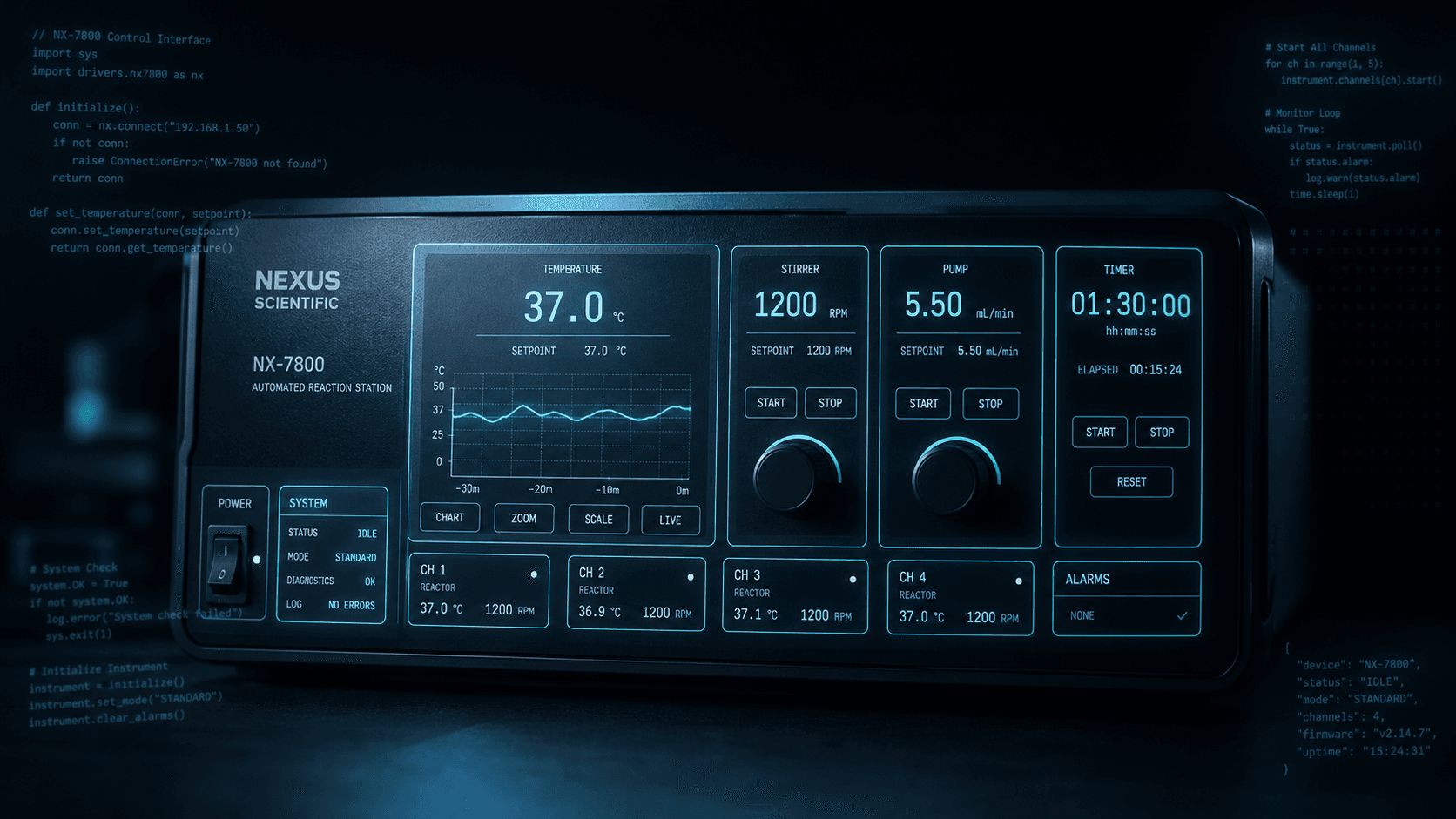
Building a scripting language for hardware panels
Rushabh's lab instruments speak in fixed-width serial strings, and every new panel meant another hardcoded Android screen. So I built a language instead: a lexer, a typed statement tree, an expression evaluator, and buttons you place on a photograph of the machine.
Aug 2026 · 7 min read
Discussion
Questions or notes. Comments live on GitHub Discussions.